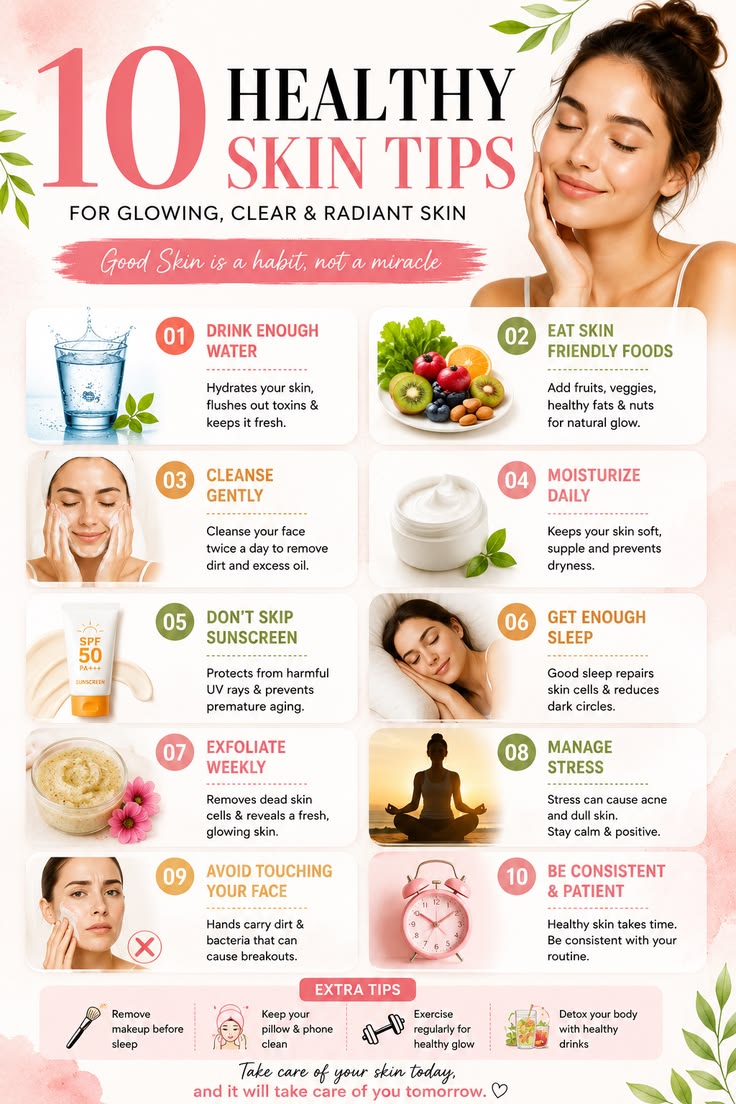

Natural Tips for Maintaining Healthy Skin
Healthy skin is often seen as a reflection of overall well-being. While skincare products can help improve the appearance of your skin, true skin health begins from within. A balanced diet, proper hydration, quality sleep, regular exercise, and healthy lifestyle habits all play an essential role in keeping your skin looking fresh, smooth, and radiant.
Many people spend large amounts of money on expensive creams and treatments, but natural daily habits can be just as important. By caring for your body and protecting your skin from everyday damage, you can maintain healthier skin at every stage of life.
In this guide, we’ll explore natural ways to support healthy skin, common habits that damage the skin, and simple tips you can incorporate into your daily routine.
Why Healthy Skin Matters
Your skin is the largest organ in your body. It serves as a protective barrier against bacteria, pollution, harmful ultraviolet (UV) rays, and environmental toxins. Healthy skin also helps regulate body temperature, prevents excessive water loss, and supports your immune system.
Good skincare is about more than appearance—it contributes to your overall health and comfort.
Healthy skin may:
- Protect against infections
- Heal wounds more effectively
- Maintain moisture
- Improve confidence
- Support overall well-being
Taking care of your skin today can help reduce premature ageing and maintain its natural function over time.
1. Stay Hydrated
Water is essential for healthy skin. Proper hydration helps maintain your skin’s natural moisture balance and supports the delivery of nutrients to skin cells.
Drinking enough water may help:
- Reduce dryness
- Improve skin elasticity
- Support a healthy complexion
- Flush waste products from the body
Although water alone cannot eliminate wrinkles or skin conditions, staying hydrated supports your skin’s overall health.
You can also increase hydration by eating water-rich foods such as:
- Watermelon
- Cucumbers
- Oranges
- Strawberries
- Tomatoes
- Lettuce
2. Eat a Nutrient-Rich Diet
Your skin needs a variety of vitamins, minerals, healthy fats, and antioxidants to remain healthy.
Focus on eating:
- Colourful fruits
- Leafy green vegetables
- Whole grains
- Lean proteins
- Nuts
- Seeds
- Healthy fats
- Legumes
A balanced diet provides the nutrients needed for healthy skin repair and renewal.
3. Include Healthy Fats
Healthy fats help maintain your skin’s protective barrier and support moisture retention.
Excellent sources include:
- Salmon
- Sardines
- Mackerel
- Avocados
- Walnuts
- Almonds
- Chia seeds
- Flaxseeds
- Olive oil
Omega-3 fatty acids found in oily fish and seeds may also help support normal skin function.
4. Eat More Antioxidant-Rich Foods
Antioxidants help protect your skin from damage caused by free radicals and environmental stress.
Foods rich in antioxidants include:
- Blueberries
- Strawberries
- Spinach
- Kale
- Broccoli
- Tomatoes
- Carrots
- Bell peppers
- Green tea
Eating a variety of colourful fruits and vegetables provides a broad range of protective nutrients.
5. Get Enough Quality Sleep
Sleep is often called “beauty sleep” for good reason.
During sleep, your body repairs damaged tissues and produces proteins that support skin renewal.
Most adults benefit from seven to nine hours of quality sleep each night.
Good sleep may help:
- Improve skin repair
- Reduce puffiness
- Support collagen production
- Improve overall complexion
Poor sleep can contribute to tired-looking skin and may worsen certain skin conditions.
6. Protect Your Skin from the Sun
Excessive exposure to ultraviolet (UV) rays is one of the leading causes of premature skin ageing.
Too much sun exposure may increase the risk of:
- Wrinkles
- Age spots
- Sunburn
- Skin damage
- Skin cancer
To protect your skin:
- Wear sunscreen with appropriate SPF.
- Seek shade during peak sunlight hours.
- Wear protective clothing.
- Use sunglasses and a wide-brimmed hat when outdoors.
Sun protection is important throughout the year, not just during summer.
7. Exercise Regularly
Physical activity improves blood circulation, helping deliver oxygen and nutrients to skin cells.
Exercise may also:
- Promote healthy skin colour
- Reduce stress
- Support collagen production
- Improve overall health
Activities such as walking, cycling, swimming, and yoga all contribute to healthy skin as part of an active lifestyle.
8. Manage Stress
Long-term stress may affect your skin by increasing inflammation and contributing to flare-ups of certain skin conditions.
Healthy ways to manage stress include:
- Meditation
- Deep breathing
- Walking outdoors
- Reading
- Yoga
- Listening to music
- Spending time with loved ones
Reducing stress supports both your mental well-being and skin health.
9. Avoid Smoking
Smoking reduces blood flow to the skin and damages collagen and elastin, the proteins responsible for keeping skin firm and elastic.
Smoking may contribute to:
- Premature wrinkles
- Dull complexion
- Slower wound healing
- Uneven skin tone
Avoiding tobacco supports healthier skin and overall health.
10. Limit Alcohol Consumption
Excessive alcohol intake may contribute to dehydration and affect the appearance of your skin.
Drinking alcohol in moderation, if at all, and staying hydrated can help maintain healthier-looking skin.
11. Cleanse Your Skin Gently
Daily cleansing removes dirt, sweat, oil, and environmental pollutants.
For healthy skin:
- Wash your face twice daily.
- Use a gentle cleanser suited to your skin type.
- Avoid harsh scrubbing.
- Pat your skin dry instead of rubbing.
Over-cleansing may remove your skin’s natural oils, leading to dryness and irritation.
12. Moisturise Regularly
Moisturising helps maintain your skin’s protective barrier and reduces moisture loss.
Choose a moisturiser appropriate for your skin type, whether it is:
- Dry
- Oily
- Combination
- Sensitive
Applying moisturiser after bathing helps lock in moisture.
13. Avoid Touching Your Face Frequently
Your hands come into contact with many surfaces throughout the day.
Touching your face frequently may transfer dirt, bacteria, and oil to your skin, potentially contributing to irritation or blemishes.
Wash your hands regularly and avoid picking at spots or blemishes.
14. Choose Skin-Friendly Foods
Certain foods provide nutrients that support healthy skin.
Excellent choices include:
- Avocados
- Tomatoes
- Carrots
- Sweet potatoes
- Citrus fruits
- Berries
- Nuts
- Seeds
- Oily fish
- Greek yoghurt
A varied, balanced diet offers the best nutritional support for your skin.
15. Maintain Healthy Daily Habits
Healthy skin is the result of consistent daily care.
Simple habits include:
- Drinking enough water.
- Eating balanced meals.
- Exercising regularly.
- Sleeping well.
- Protecting your skin from the sun.
- Managing stress.
- Avoiding smoking.
- Using gentle skincare products.
These habits work together to support long-term skin health.
Common Habits That Can Damage Your Skin
Avoid these common mistakes:
- Smoking
- Excessive sun exposure
- Poor sleep
- Dehydration
- High-sugar diets
- Picking at pimples
- Skipping sunscreen
- Using harsh skincare products
- Not removing makeup before bed
Reducing these habits may help maintain healthier skin.
When to Seek Professional Advice
While many skin concerns improve with healthy habits, consult a healthcare professional or dermatologist if you experience:
- Persistent acne
- Severe eczema
- Unusual moles or skin changes
- Frequent rashes
- Non-healing wounds
- Sudden changes in skin colour or texture
Early evaluation is important for diagnosing and treating underlying conditions.
Final Thoughts
Healthy skin starts with healthy living. While skincare products can complement your routine, the foundation of radiant skin comes from nourishing your body with a balanced diet, staying hydrated, exercising regularly, getting enough sleep, and protecting your skin from environmental damage.
Small daily habits—such as drinking more water, eating antioxidant-rich foods, wearing sunscreen, managing stress, and avoiding smoking—can have a lasting impact on your skin’s appearance and overall health. Consistency is more important than perfection, and even gradual improvements can produce noticeable results over time.
Remember that everyone’s skin is unique, and healthy skin is not about achieving perfection. By caring for your body from the inside out and following a simple, consistent skincare routine, you can maintain naturally healthy skin and enjoy a glowing complexion for years to come.