
The Connection Between Nutrition and Brain Health
The human brain is one of the most complex and important organs in the body. It controls your thoughts, memory, emotions, movement, and every function that keeps you alive. Just like the rest of your body, your brain relies on proper nutrition to perform at its best. The foods you eat provide the energy and nutrients needed to support brain function, maintain healthy nerve cells, and protect against cognitive decline.
A balanced diet rich in vitamins, minerals, healthy fats, and antioxidants can improve concentration, enhance memory, support mental well-being, and reduce the risk of age-related brain disorders. On the other hand, a diet high in processed foods, added sugars, and unhealthy fats may negatively affect cognitive performance and emotional health.
In this guide, we’ll explore the connection between nutrition and brain health, the essential nutrients your brain needs, and practical ways to build a brain-friendly diet.
Why Nutrition Matters for Brain Health
Although the brain makes up only about 2% of your body weight, it uses approximately 20% of your body’s energy. Every thought, memory, and movement depends on a constant supply of nutrients delivered through the bloodstream.
Good nutrition supports brain health by:
- Providing energy for brain cells
- Supporting communication between nerve cells
- Protecting the brain from oxidative stress
- Reducing inflammation
- Helping produce neurotransmitters that regulate mood and memory
- Supporting healthy blood flow to the brain
A nutrient-rich diet benefits people of all ages, from children and students to working adults and older individuals.
How the Brain Uses Nutrients
The brain requires a steady supply of glucose, oxygen, vitamins, minerals, amino acids, and healthy fats to function properly. These nutrients help create neurotransmitters, maintain cell membranes, and repair damaged tissues.
Without adequate nutrition, brain function may decline, leading to problems such as:
- Difficulty concentrating
- Memory problems
- Fatigue
- Mood changes
- Slower thinking
- Reduced mental performance
Eating balanced meals throughout the day helps maintain steady energy levels and supports optimal cognitive function.
Essential Nutrients for a Healthy Brain
1. Omega-3 Fatty Acids
Omega-3 fatty acids are among the most important nutrients for brain health. They are a major component of brain cell membranes and support communication between nerve cells.
Benefits of omega-3s include:
- Improved memory
- Better learning ability
- Support for healthy mood
- Reduced inflammation
- Healthy brain development
Excellent food sources include:
- Salmon
- Sardines
- Mackerel
- Trout
- Walnuts
- Chia seeds
- Flaxseeds
Including these foods regularly can support long-term brain function.
2. Antioxidants
The brain is particularly vulnerable to damage from free radicals, which are unstable molecules produced during normal metabolism and exposure to environmental factors.
Antioxidants help protect brain cells from oxidative stress.
Foods rich in antioxidants include:
- Blueberries
- Strawberries
- Spinach
- Kale
- Broccoli
- Dark chocolate (in moderation)
- Green tea
A colourful diet rich in fruits and vegetables provides a wide range of protective antioxidants.
3. B Vitamins
B vitamins play an essential role in energy production and the healthy functioning of the nervous system.
They also help the body produce neurotransmitters that influence mood and cognitive performance.
Important B vitamins include:
- Vitamin B6
- Vitamin B12
- Folate (Vitamin B9)
Good dietary sources include:
- Eggs
- Fish
- Poultry
- Dairy products
- Leafy green vegetables
- Beans
- Whole grains
Meeting your daily requirements supports healthy brain function throughout life.
4. Vitamin D
Vitamin D contributes to many functions in the body, including brain health.
Research suggests that maintaining healthy vitamin D levels may support:
- Cognitive performance
- Mood regulation
- Healthy nerve function
Vitamin D can be obtained from:
- Sunlight exposure
- Oily fish
- Egg yolks
- Fortified dairy products
- Fortified plant-based alternatives
If you are concerned about your vitamin D status, speak with a healthcare professional before taking supplements.
5. Protein
Protein provides amino acids, which are the building blocks for neurotransmitters such as serotonin and dopamine.
These chemicals help regulate:
- Mood
- Motivation
- Attention
- Memory
- Sleep
Healthy protein sources include:
- Chicken
- Turkey
- Fish
- Eggs
- Beans
- Lentils
- Tofu
- Greek yoghurt
Including protein in each meal helps provide a steady supply of amino acids for brain function.
The Role of Healthy Fats
Healthy fats are essential for maintaining the structure of brain cells.
Good sources include:
- Avocados
- Olive oil
- Nuts
- Seeds
- Oily fish
These foods support healthy blood vessels, improve circulation, and help reduce inflammation throughout the body.
Try to limit foods high in trans fats and heavily processed oils, as these may negatively affect heart and brain health.
Hydration and Brain Function
Water is often overlooked when discussing brain health, yet even mild dehydration may affect concentration and mental performance.
Staying hydrated helps:
- Improve focus
- Maintain alertness
- Support memory
- Reduce headaches
- Enhance cognitive performance
Carry a reusable water bottle and drink regularly throughout the day, especially during hot weather or physical activity.
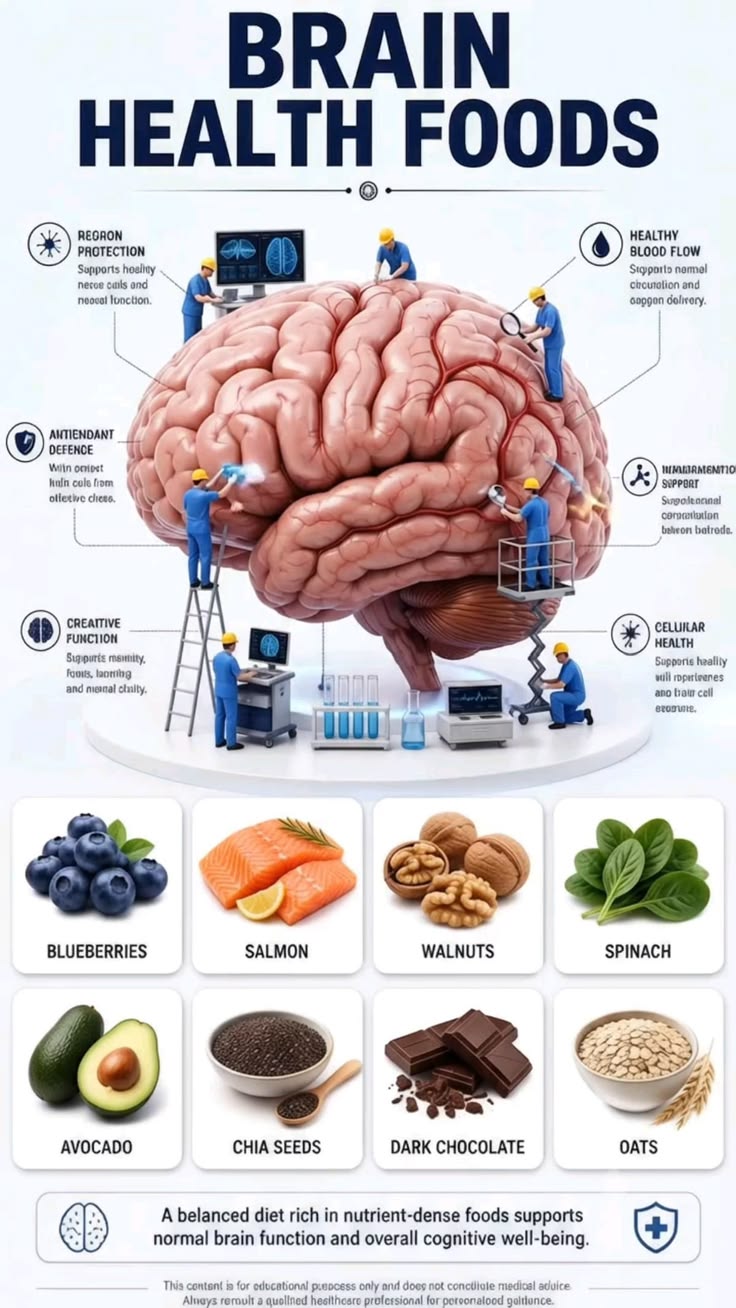
Foods That Support Brain Health
Many everyday foods provide nutrients that benefit the brain.
Excellent choices include:
- Blueberries
- Salmon
- Walnuts
- Spinach
- Broccoli
- Eggs
- Oats
- Greek yoghurt
- Avocados
- Pumpkin seeds
Eating a wide variety of whole foods helps ensure your brain receives the nutrients it needs.
Foods to Limit
Certain foods may have a negative impact on long-term brain health when consumed in excess.
These include:
- Sugary drinks
- Highly processed snacks
- Refined carbohydrates
- Deep-fried foods
- Excessive alcohol
- Foods high in trans fats
Occasional treats can fit into a balanced lifestyle, but nutritious foods should form the foundation of your diet.
The Gut-Brain Connection
Scientists have discovered a close relationship between the digestive system and the brain, often referred to as the “gut-brain axis.”
Healthy gut bacteria may influence:
- Mood
- Stress response
- Memory
- Immune function
- Brain development
To support gut health, include:
- Yoghurt with live cultures
- Kefir
- Whole grains
- Fruits
- Vegetables
- Beans
- Lentils
A fibre-rich diet helps nourish beneficial gut bacteria.
Nutrition Across Different Life Stages
Brain health is important at every age.
Children and Teenagers
Growing brains require:
- Healthy fats
- Protein
- Iron
- Calcium
- Vitamins
Balanced meals support learning, memory, and healthy development.
Adults
Healthy eating supports:
- Productivity
- Concentration
- Mental resilience
- Emotional well-being
Maintaining healthy habits during adulthood may also reduce the risk of future cognitive decline.
Older Adults
As we age, nutrition becomes increasingly important for maintaining memory and cognitive function.
A balanced diet, regular exercise, and social engagement all contribute to healthy ageing.
Lifestyle Habits That Support Brain Health
Nutrition is only one part of maintaining a healthy brain.
For the best results:
- Exercise regularly.
- Sleep seven to nine hours each night.
- Stay mentally active through reading or puzzles.
- Manage stress effectively.
- Stay socially connected.
- Avoid smoking.
- Limit excessive alcohol intake.
These healthy habits work together with good nutrition to support long-term cognitive health.
Common Myths About Brain Foods
Myth 1: One Superfood Can Improve Intelligence
No single food can dramatically increase intelligence. Brain health depends on an overall balanced diet and healthy lifestyle.
Myth 2: Supplements Are Better Than Food
For most people, obtaining nutrients through whole foods is preferable because foods provide a combination of vitamins, minerals, fibre, and beneficial plant compounds.
Myth 3: Sugar Gives the Brain More Energy
While the brain uses glucose for energy, regularly consuming large amounts of added sugar can contribute to energy crashes and poor long-term health. Complex carbohydrates from whole grains, fruits, and vegetables provide a steadier source of fuel.
Tips for Building a Brain-Healthy Diet
Making small, consistent improvements to your diet can have lasting benefits.
Try these simple habits:
- Eat a colourful variety of fruits and vegetables.
- Choose whole grains instead of refined grains.
- Include oily fish regularly.
- Snack on nuts and seeds.
- Drink plenty of water.
- Reduce sugary drinks.
- Limit highly processed foods.
- Prepare more meals at home.
Consistency is more important than perfection.
Final Thoughts
The connection between nutrition and brain health is clear. The foods you eat play a vital role in supporting memory, concentration, mood, learning, and long-term cognitive function. A diet rich in fruits, vegetables, whole grains, healthy fats, lean proteins, and antioxidant-rich foods provides the nutrients your brain needs to perform at its best.
At the same time, limiting highly processed foods, added sugars, and unhealthy fats can help protect your brain and support overall health. Combined with regular exercise, quality sleep, stress management, and lifelong learning, healthy eating creates a strong foundation for brain health at every stage of life.
Start with simple changes, such as adding more colourful vegetables to your meals, replacing sugary snacks with nuts or fruit, and staying hydrated throughout the day. These small daily choices can make a meaningful difference in your mental performance, emotional well-being, and long-term brain health.